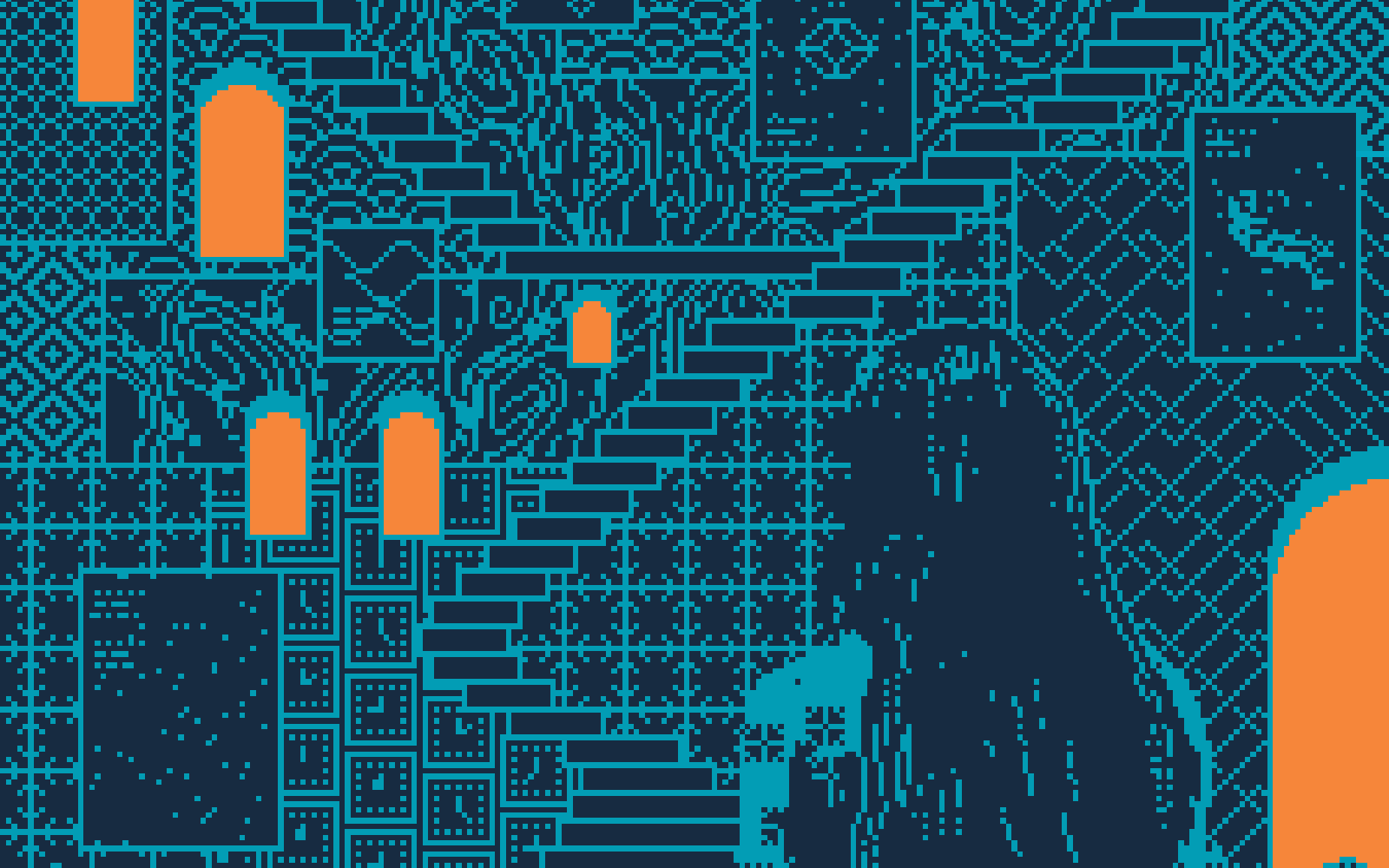
Memories Woven
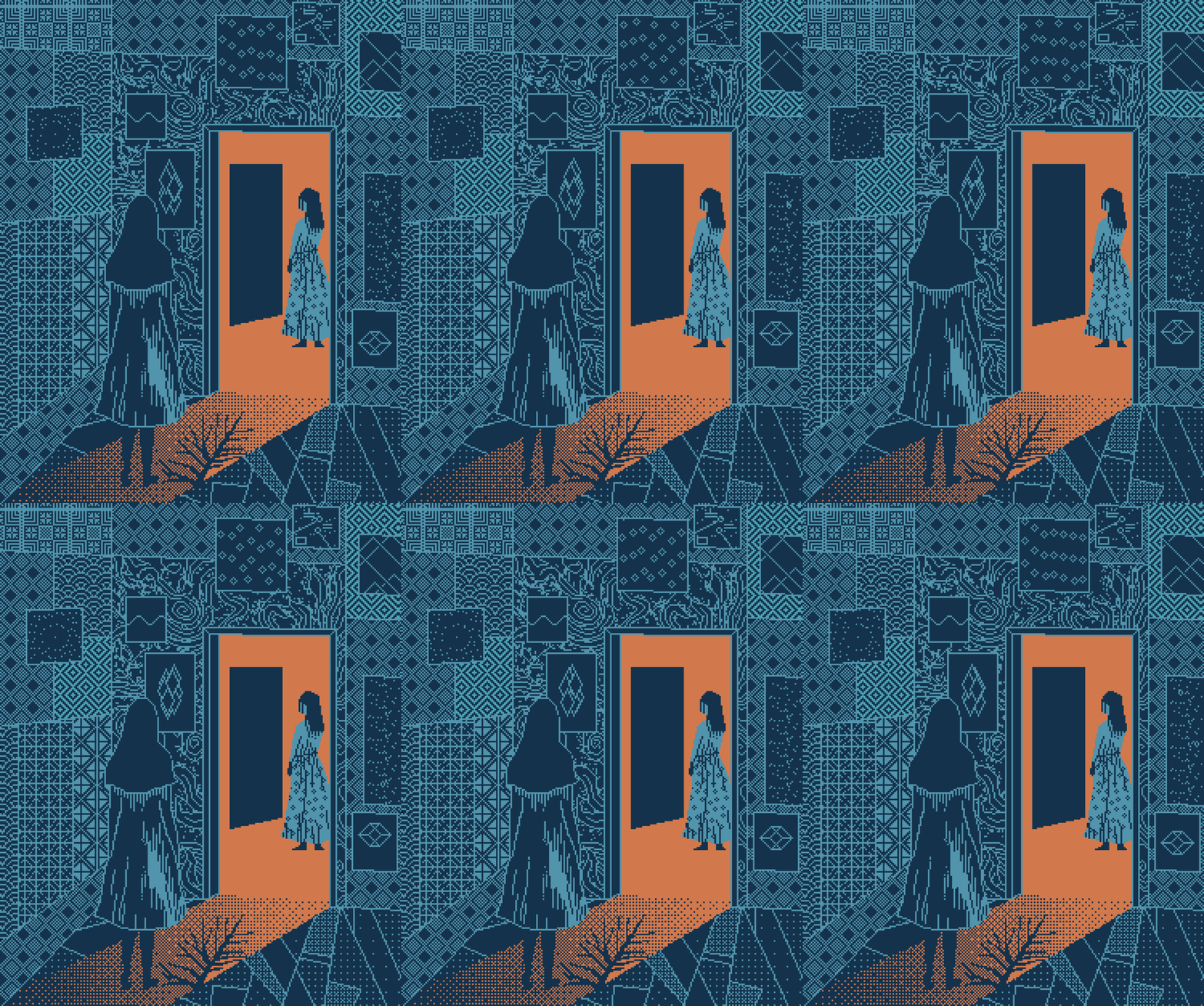
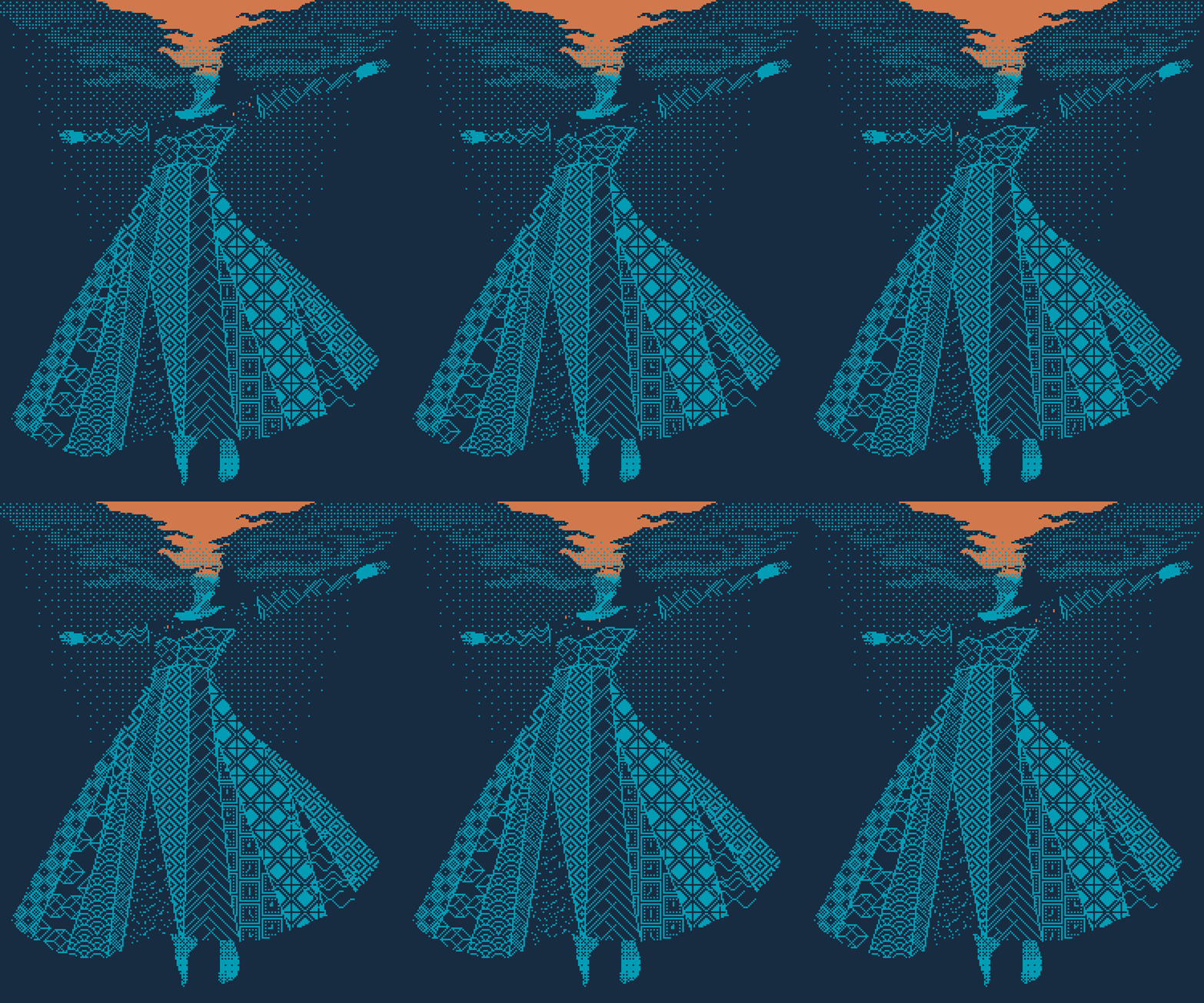
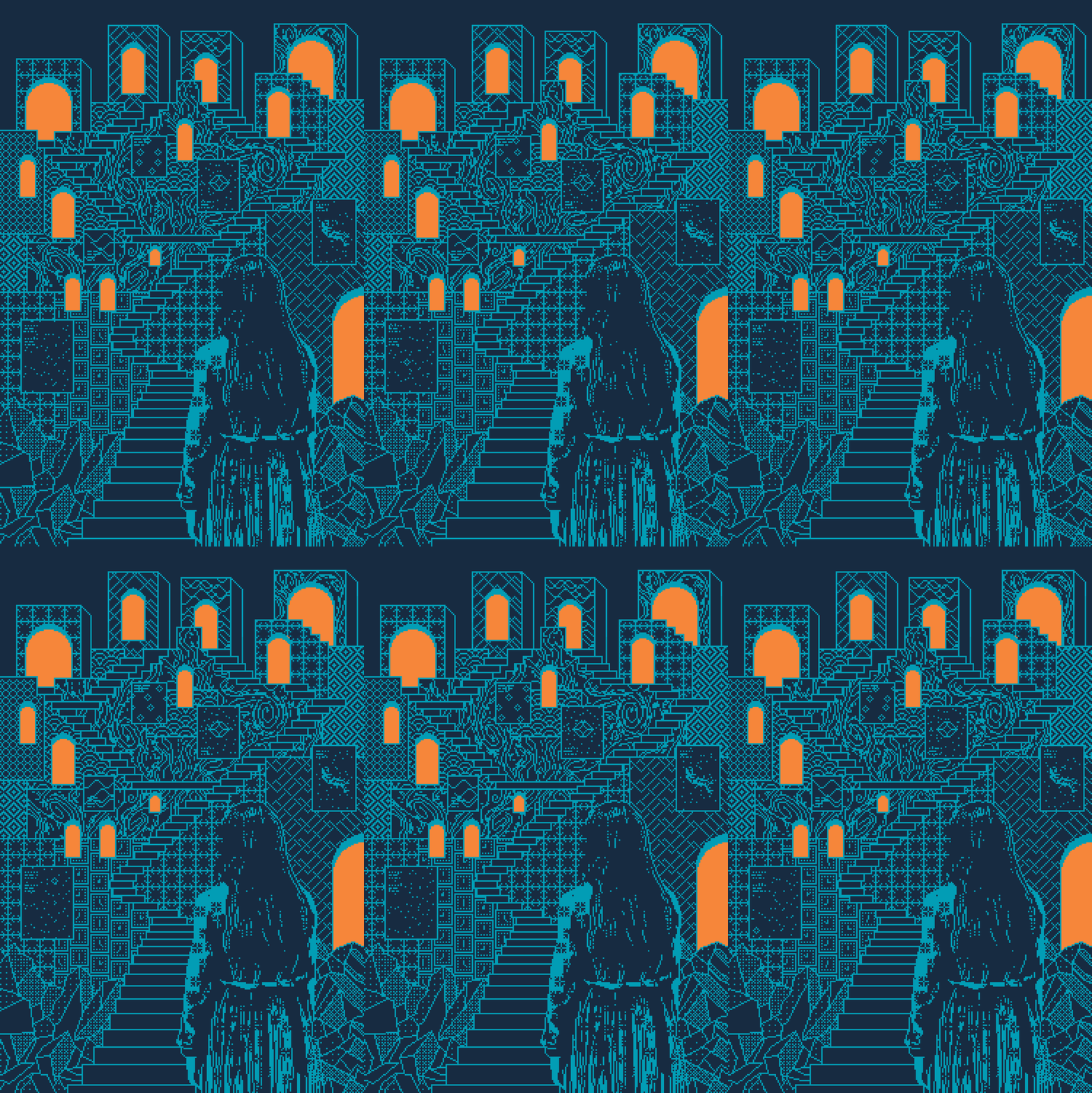
Memories Woven is a small series of animated pixel works built from memories of growing up in South Africa: tiled rooms, woven surfaces, domestic patterns, architectural edges. Those patterns are the actual material of the images: fragments of the places I remember, rebuilt pixel by pixel.
Each image has a figure seen from behind, borrowing from the Rückenfigur tradition, standing at the edge of a space such as a doorway, a body of water, a stairway, or a city. The spaces work like portals: they open onto places that feel familiar but never fully reachable, which is roughly how the memories themselves behave.
The animation is deliberately quiet. Nothing dramatic happens; the movement sits inside the patterns, shifting and pulsing, because memory never holds still either. It changes a little every time you go back to it.
The three works — Through Cobalt, Through Water, and Through Rückenfigur — run the same idea through different spaces, with rooms, landscapes, and buildings each becoming a portal into a remembered place.
The three works
Published in TzAR
The three works were published in TzAR: Pixel Art Anthology in 2025. Print does something odd to animated work: the spread fixes each piece at a single frame, so the book becomes a still record of images that were made to move.
The anthology itself was made as a slower form of attention for a fast-moving Tezos pixel art scene: a way of keeping part of that culture outside the churn of mint feeds and timelines, while showing the range of styles and methods artists were developing there.
“One of the core tensions in pixel art is between constraint and creativity.”
The introduction describes pixel art as a medium of deliberate decisions inside tight limits: palette, frame count, composition, and the placement of each mark. It argues that within those shared constraints artists still arrive at deeply personal work with unmistakable visual signatures.
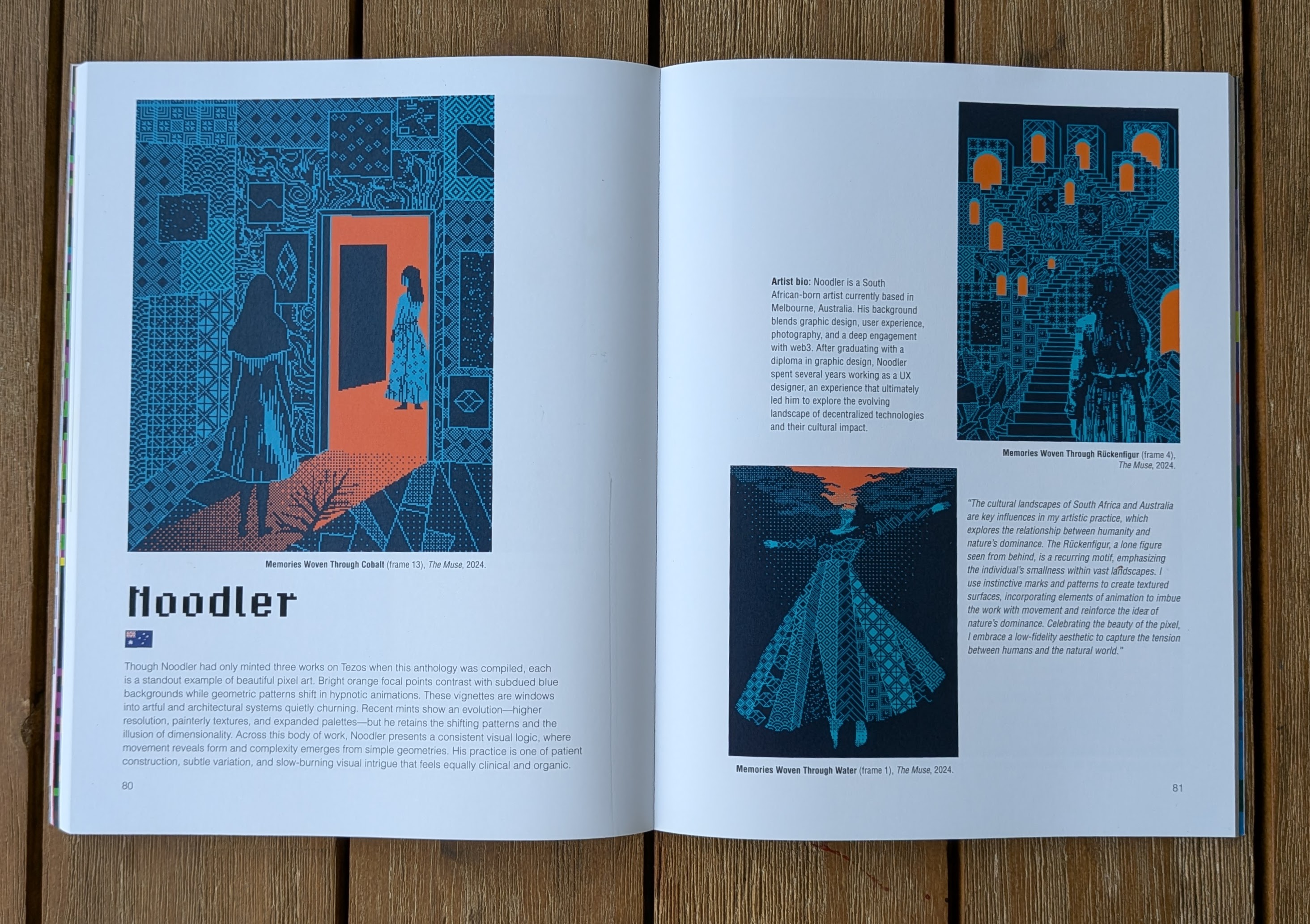
“Movement reveals form and complexity emerges from simple geometries.”
The review text treats the series as a compact but fully formed body of pixel work: bright orange focal points against subdued blue fields, geometric patterns shifting through the animations, each image opening onto an architectural system in motion. It also connects the series to where the practice went afterwards: higher resolution, broader palettes, and more painterly surfaces. The same underlying logic of shifting pattern and slow construction runs through all of it.